
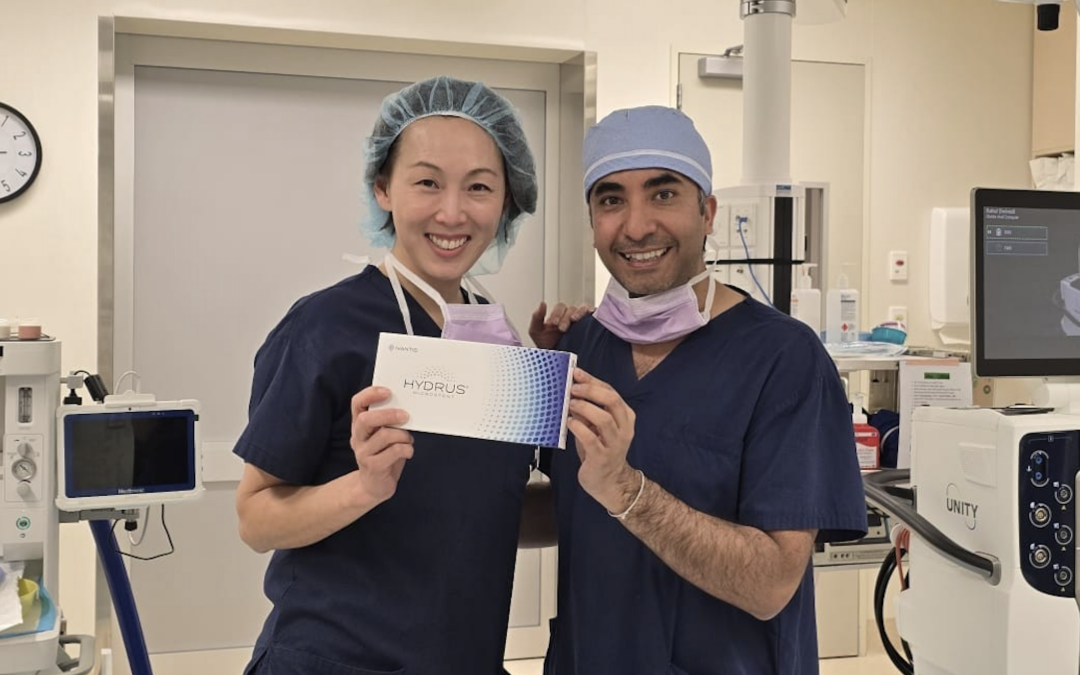
In August, Southern Eye Specialists reached a milestone in glaucoma care, becoming the first clinic in the South Island to implant the Hydrus Microstent. Dr. Rahul Dwivedi carried out the procedure on two patients, delivering a new option for those living with glaucoma.
The Hydrus Microstent is a tiny and flexible device (roughly the size of an eyelash) made from nitinol, a nickel-titanium alloy prized for its biocompatibility.
The stent is used in minimally invasive glaucoma surgery (MIGS) and is inserted into the Schlemm’s canal, the eye’s natural drainage channel to help lower intraocular pressure.
For many patients it can be implanted as a standalone procedure or seamlessly during routine cataract surgery – the stent is placed through the same tiny micro-incision without disturbing the surrounding conjunctival tissue.
For Dr. Dwivedi, the appeal of the new stent lies in the opportunities this procedure can provide to patients.
“Performing the first Hydrus Microstent implantation in the South Island is an exciting step for our patients,” says Dr. Dwivedi.
“It gives us another effective, minimally invasive option for managing glaucoma,” he says. “It allows patients the opportunity to reduce or even remove the need for daily drops and reduces the need for more invasive operations, which carry greater risks and a significant burden of aftercare.”
“As the only centre in the South Island that currently offers this surgery, it’s a significant addition to the procedures and care we can provide here at Southern Eye.”
The new technology is backed by strong clinical evidence. The HORIZON Study, a large, multicentre, randomised controlled trial, followed patients for 24 months to compare outcomes between combined cataract and Hydrus Microstent surgery, and cataract surgery alone. At 24 months, 77.3% of patients who received the stent achieved a 20% or greater reduction in unmedicated eye pressure, compared with 48% in the control group. Most importantly, the trial found no significant difference in safety outcomes between the two groups.
In everyday terms for the patient, this evidence points to less day-to-day reliance on glaucoma drops and, for many, a lower risk of the pressure-related damage that glaucoma can cause over time. If combined with cataract surgery, there can also be an improvement in visual acuity.
It’s results like these that are driving wider adoption of minimally invasive glaucoma surgery. As the field becomes more established, ongoing research continues to build the case for performing these procedures as either standalone cases or combining them with routine cataract surgery, giving both surgeons and patients more confidence in long-term outcomes.
With this strong evidence base, Southern Eye Specialists is proud to bring this process to patients in the South Island. For those patients with glaucoma who are displaying disease progression on current treatment, struggling with their drop burden or considering cataract surgery, the Hydrus Microstent may be worth considering.
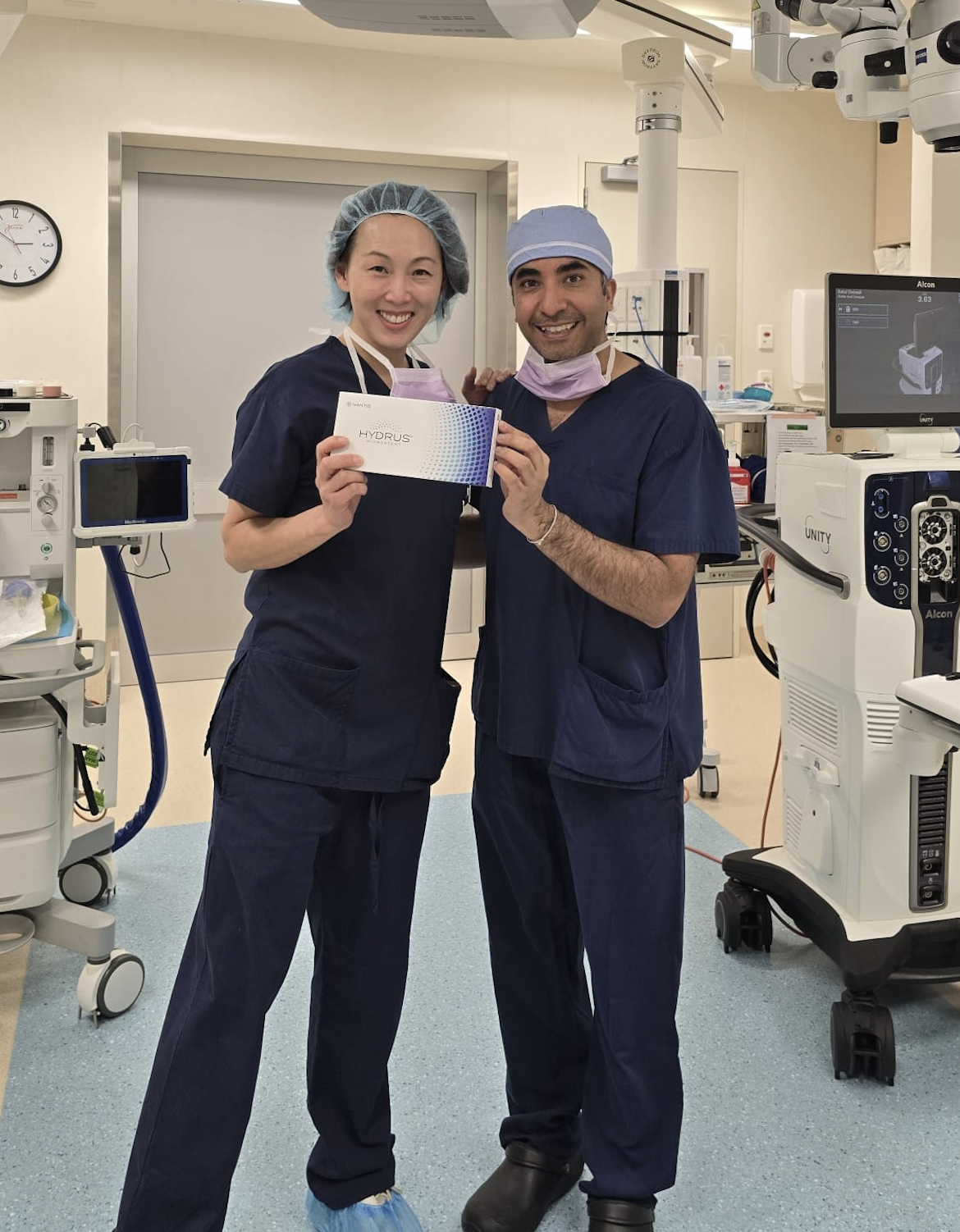
IMAGE: Dr Rahul Dwivedi with Alcon Glaucoma specialist Sujan Soo-Jung Hong post-surgery.